Meta Gets Probed by EU


Neural Notes Bonus Evening Edition
The EU just opened an antitrust investigation into Meta for blocking AI competitors from WhatsApp. Australia started removing teenagers from Instagram this week. Two stories, one pattern: the platforms that built their empires on open access are now deciding who gets in. If you build anything on someone else’s platform, this is your wake-up call.
📰 The Rundown
⚖️ EU Opens Antitrust Probe Into Meta Over WhatsApp AI Lockout

➡️ The move: The European Commission launched a formal antitrust investigation into Meta on Thursday over its new policy blocking third-party AI chatbots from WhatsApp. Starting in January, Meta will prohibit AI providers from using WhatsApp’s business API when AI is the “main service offered.” Translation: OpenAI, Perplexity, and smaller AI startups like Luzia and Poke can no longer reach customers through the messaging app that billions use daily.
⚡ Why it matters: Meta built WhatsApp into the dominant messaging platform partly through openness. Now it’s pulling up the drawbridge while its own Meta AI sits comfortably inside. The EU’s concern is straightforward: when you control the distribution, you can strangle competitors before they grow. If Meta loses, fines could reach 10% of global revenue. More importantly, regulators may force the platform open again.
🎯 Your takeaway: Every AI integration you build on someone else’s platform is a bet that they won’t change the rules. WhatsApp just reminded everyone: they always can.
📵 Australia Begins Removing Teens as Social Media Ban Takes Effect
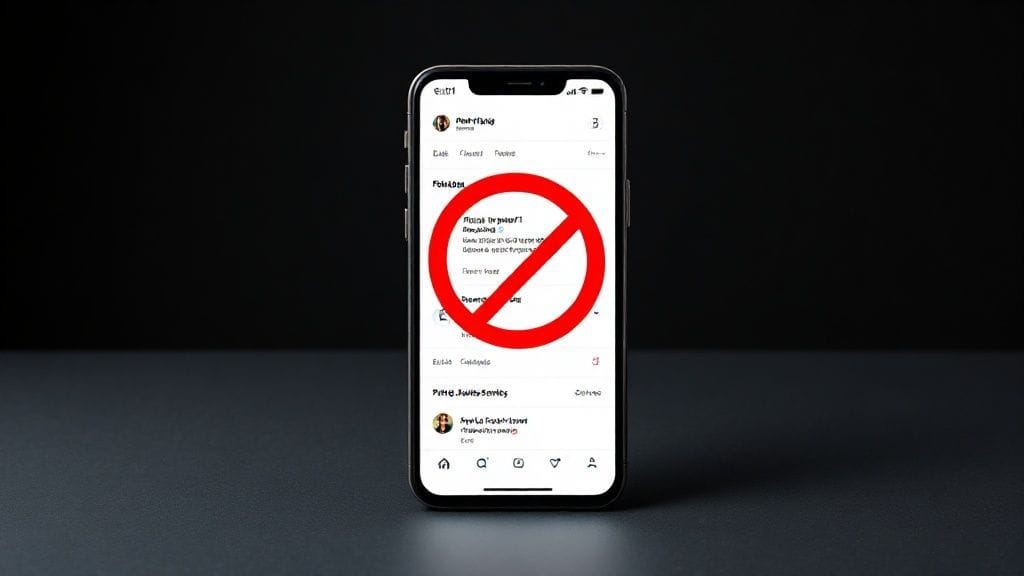
➡️ The move: Meta started deactivating accounts belonging to users under 16 in Australia this week, ahead of the country’s world-first social media ban taking effect December 10. Ten major platforms including TikTok, YouTube, Snapchat, and X must block underage users or face fines up to $32 million. Instagram alone has roughly 350,000 Australian users aged 13 to 15 who will lose their accounts. There’s no parental consent exception.
⚡ Why it matters: Australia is running the world’s first large-scale experiment in age-gating social media. The enforcement mechanism remains uncertain: Meta is asking teens to scan their faces or provide ID, while YouTube warns that removing logged-in accounts actually makes kids less safe since they lose safety filters. Other countries are watching closely. Malaysia already announced it will follow Australia’s lead in 2026.
🎯 Your takeaway: Whether you think this is overreach or overdue, it signals a shift. The era of “move fast and figure it out later” is ending. Regulators are catching up.
💡 AI Infrastructure Race Heats Up as Data Centers Strain Power Grids

➡️ The move: CoreWeave, the AI cloud provider, secured a $555 million loan this week to convert a former pharmaceutical research complex in New Jersey into a 250-megawatt data center. The company now operates 41 data centers worldwide with 590 megawatts of capacity, and has contracts worth $55.6 billion with OpenAI, Meta, and Nvidia. Meanwhile, Bloom Energy stock surged 11% as investors bet on power companies serving AI’s insatiable electricity demands.
⚡ Why it matters: Every AI breakthrough you read about depends on data centers, and every data center depends on power. The infrastructure buildout is creating new bottlenecks and new winners. Companies that can deliver reliable, scalable compute are becoming as strategic as the AI models themselves. This is the hidden supply chain behind every chatbot response.
🎯 Your takeaway: AI isn’t just a software revolution. It’s an energy revolution. The companies solving the power problem may matter as much as the ones building the models.
🔧 Tool Spotlight: Runway's Act Two
Runway’s Act Two is a new feature in their Gen-3 Alpha model that transfers real actor performances to any character. Record yourself speaking and gesturing, then apply those movements to an AI-generated character, an illustration, or even a stock image.

What makes it different: Previous AI video tools required you to describe motion in text prompts and hope for the best. Act Two lets you show the AI exactly what you want. Record a 10-second performance on your phone, upload a character image, and the AI handles the rest: facial expressions, lip sync, hand gestures, body movement.
Best for: Product demos with animated mascots, explainer videos without hiring actors, social content with consistent brand characters, and rapid prototyping before expensive production shoots.
Pricing: Runway offers 125 free credits to start. Standard plans run $12 per month for 625 credits. The Unlimited plan at $100 per month works for heavy users.
👉 Try it: Upload a selfie video and a character reference at runwayml.com
👉 Try This Today: The Handoff Note
Switching contexts destroys productivity. Use AI to create seamless transitions between tasks so you can pick up exactly where you left off.
The technique: Before stepping away from any complex task, have AI generate a "handoff note" for your future self summarizing your progress, next steps, and open questions.
How to do it:
- Capture your current state At a natural stopping point, paste your work-in-progress into your AI tool (draft document, code, research notes, whatever you're working on).
- Request the handoff Use this prompt: "I need to step away from this. Create a brief handoff note that covers: what's been completed, what decisions I've made and why, what's next, and any open questions I was wrestling with."
- Save it Store the note at the top of your document or in a dedicated "handoff" file for the project.
- Use it When you return (tomorrow, next week, after the meeting), read the handoff note first. You'll re-enter the work in seconds instead of spending 15 minutes reconstructing your mental state.
Why it works: Context switching costs 23 minutes on average to recover from. Your future self is essentially a different person who needs onboarding. This technique turns AI into a bridge between your past and future selves, eliminating the "where was I?" tax that fragments deep work.
Time required: 2 minutes to create. Saves 10-20 minutes every time you return to the task.
✨ The Wire
🔗 Microsoft stock fell 3% after reports the company lowered growth targets for some AI software sales, though Azure and cloud services continue posting 40% year-over-year growth. TS2
🔗 MIT researchers developed a mathematically grounded system for soft robots that can deform and adapt while interacting with people and objects without violating safety limits. MIT News
🔗 Virgin Australia and Wesfarmers announced significant partnerships with OpenAI to integrate AI capabilities across their operations, signaling enterprise AI adoption accelerating outside the tech sector. HumAI
Neural Notes — AI that amplifies your value, not replaces it.