Google and Microsoft Reveal AI Is Writing Their Code
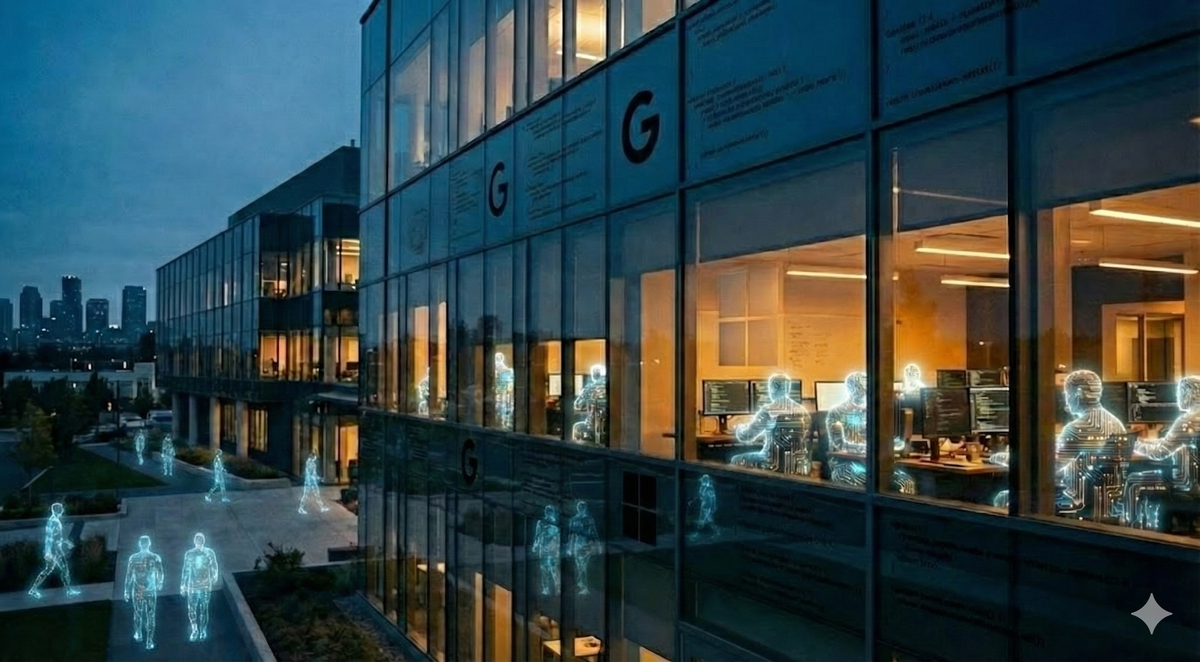
Microsoft and Google now have AI writing nearly a third of their code. Meta's CEO predicts half of development will be AI-driven within a year. The numbers are in, and they're staggering. But before you panic, look closer: this shift isn't about replacement. It's about who learns to collaborate with these tools first.
Images created with Nano Banana Pro 🍌
📰 The Rundown
AI Writes 30% of Big Tech's Code. Here's What That Actually Means for You.
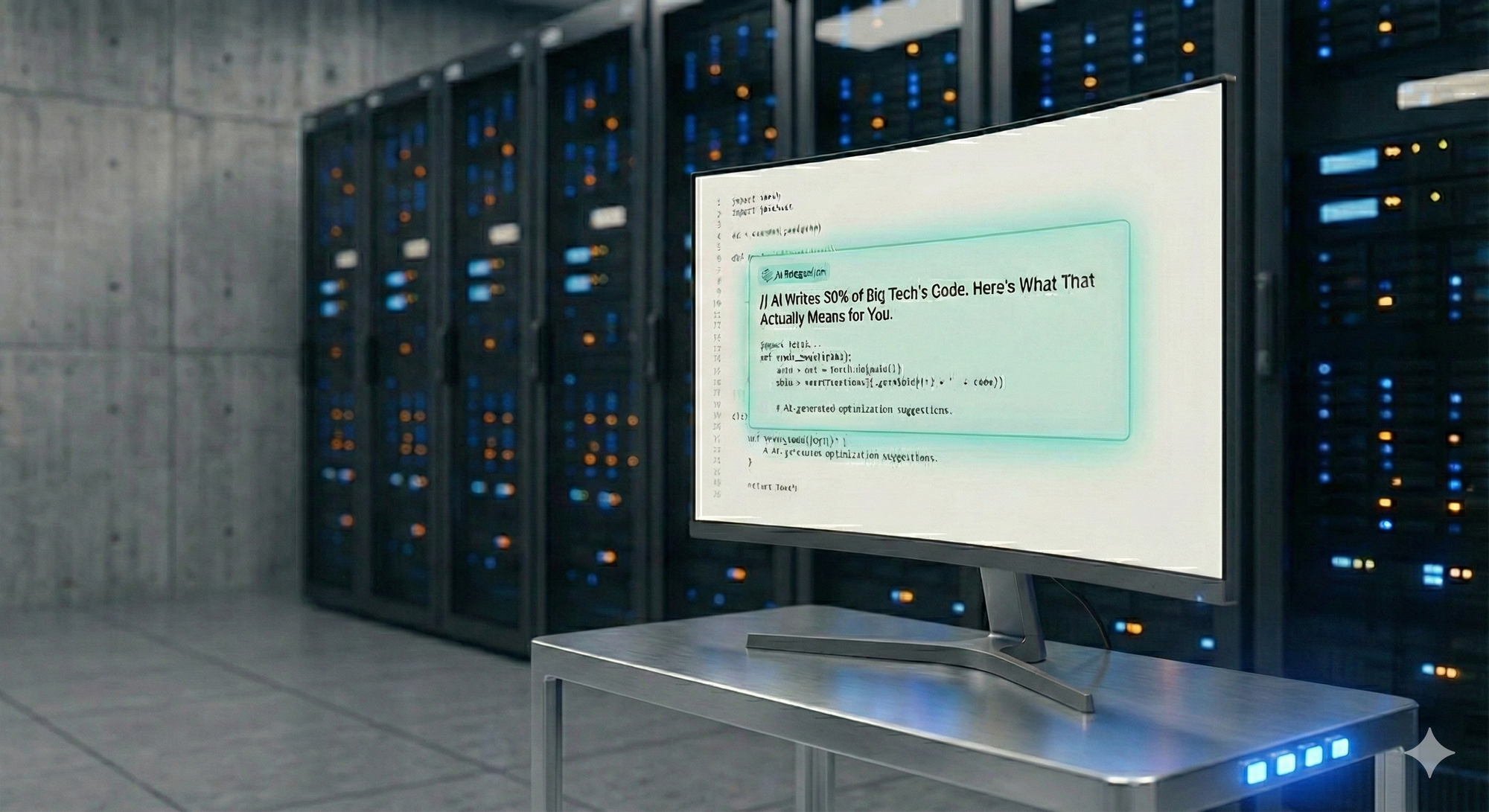
➡️ The Move: Microsoft CEO Satya Nadella revealed that 20-30% of code in Microsoft's repositories is now "written by software." He made this disclosure during a conversation with Meta CEO Mark Zuckerberg at Meta's LlamaCon event. Google isn't far behind: CEO Sundar Pichai confirmed more than a quarter of all new code at the search giant is AI-generated. Zuckerberg went further, predicting that "in the next year probably, half the development is going to be done by AI, as opposed to people."
⚡ Why this matters: The nuance in Nadella's comment reveals more than the headline. He noted Microsoft sees better results with AI-generated Python than C++, admitting the latter is "not that great." AI excels at certain languages and tasks, not everything. The technology handles new code well but struggles with reworking existing material. These companies aren't replacing developers. They're amplifying their output on repetitive, predictable work while humans focus on architecture, judgment, and the creative decisions AI can't make.
🎯 Your takeaway: The question isn't whether AI will write code at your company. It's whether you'll be directing it or competing with it.
The Productivity Paradox: AI's Top Users Are Burning Out Fastest

➡️ The Move: A study by the Upwork Research Institute found that 88% of the most productive, AI-enabled workers show higher rates of burnout and disengagement. These top performers are twice as likely to quit compared to their non-AI-using peers. Meanwhile, 77% of workers surveyed said AI tools increased their workload and decreased productivity, and 71% of full-time employees report feeling burned out.
⚡ Why this matters: This is the paradox nobody's talking about: the people using AI most effectively are also the most exhausted. The problem isn't the technology. It's the expectation gap. When AI lets you produce more, employers expect more. The time saved gets filled with additional tasks. New responsibilities emerge: reviewing AI outputs, learning new tools, fact-checking for hallucinations. Quantum Workplace found that U.S. employees who frequently use AI reported 45% higher burnout rates than their peers. Digital exhaustion has jumped to 84% among workers, even as 70% now use AI weekly.
🎯 Your takeaway: More tools doesn't mean less work. Set boundaries before the expectation creep sets in. The goal is working smarter, not just faster.
Google's DeepMind Just Out-Predicted Every Hurricane Model on Earth
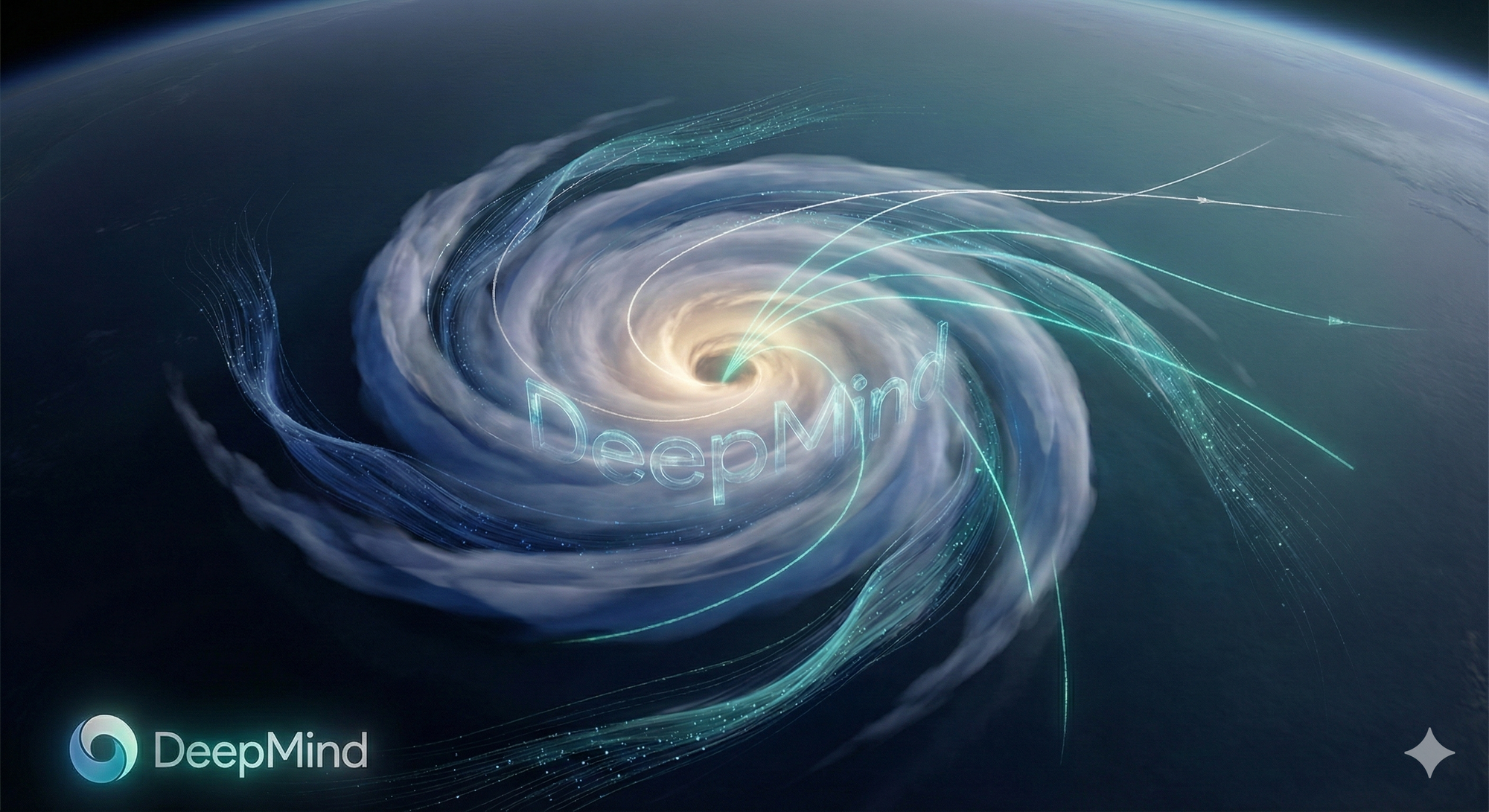
➡️ The Move: As the 2025 Atlantic hurricane season ends, the National Hurricane Center revealed that Google's DeepMind AI model outperformed all traditional forecasting systems. The AI accurately predicted Hurricane Melissa's path and Category 5 intensity a week before the devastating storm hit Jamaica with 185 mph winds, while other models disagreed on where it would go.
⚡ Why this matters: Traditional models like NOAA's Global Forecast System use physics equations to calculate how wind, moisture, and heat move through the atmosphere. DeepMind takes a completely different approach: it doesn't know physics at all. Instead, it analyzes historical records to identify patterns humans couldn't extract on their own. The National Hurricane Center now references DeepMind in its official forecast discussions. "AI will be a component of the hurricane forecast process going forward," said science operations officer Wallace Hogsett. This is AI doing what it does best: pattern recognition at scale in domains where human analysis hits its limits.
🎯 Your takeaway: AI's killer app isn't chatbots. It's finding patterns in complexity that humans simply can't process.
🔧 Tool Spotlight: Windsurf IDE
If you've been curious about AI-assisted coding but intimidated by the learning curve, Windsurf is worth exploring.

What it does: Windsurf is an AI-native code editor built on VS Code's foundation. Its standout feature, Cascade, maintains deep contextual awareness of your entire project, not just the file you're working in. When you describe what you want in plain English, it can generate code across multiple files, run terminal commands, and iterate on errors automatically.
Why it matters for non-developers: The barrier keeps shrinking. Marketing teams prototyping internal tools, operations managers building dashboards, HR automating workflows. Windsurf writes changes to disk before you approve them, so you see results in real-time. If something breaks, you can revert in one click.
Best for: Anyone building simple automations, creating internal tools, or wanting to understand what developers on your team actually do. Users describe it as making coding "insanely fun and fast."
Pricing: Free tier available. Pro starts at $15/month.
👉 Try This Today: The Context-First Prompt
Stop getting mediocre AI outputs. Here's the structure that actually works.
The formula:
- Role — Assign the AI a specific expertise first
- Context — Who you are, who the audience is
- Task — Start with an action verb (analyze, create, summarize)
- Format — Specify length, tone, and structure
Before: "Write me an email about the project update"
After: "You're a senior project manager at a tech company. Write a 150-word email to stakeholders updating them on Q4 progress. Tone should be confident but acknowledge one challenge we're addressing. End with a clear next step."
The difference is context. AI models work best when they understand the role, the audience, and the constraints before they start generating. Lead with who you need the AI to be, not just what you need it to do.
Time to implement: 2 minutes per prompt.
✨ The Wire
Google's DeepMind weather model outperformed traditional systems during the 2025 hurricane season, accurately predicting Hurricane Melissa's Category 5 intensity a week before landfall. Read more
Meta Reality Labs posted $4.4 billion in Q3 operating losses but saw 74% revenue growth from Quest 3S and AI-powered smart glasses. Read more
ServiceNow's AI agents found vulnerable to "second-order" prompt injection attacks due to default configuration settings, highlighting enterprise AI security concerns. Read more
78% of organizations now report using AI in 2024, up from 55% the previous year. The adoption curve is accelerating. [MarketingProfs AI Update]
📚 Go Deeper
Microsoft and Meta CEOs discuss AI's impact on software development — Full context on the 30% code revelation
The Burnout Paradox of AI — Why productivity tools are exhausting knowledge workers
Windsurf vs Cursor comparison — Detailed breakdown of AI IDE options
NPR: The future of hurricane forecasting is AI — How DeepMind changed weather prediction
Neural Notes - AI that amplifies your value, not replaces it.