Feds Wage War on State AI Regulation

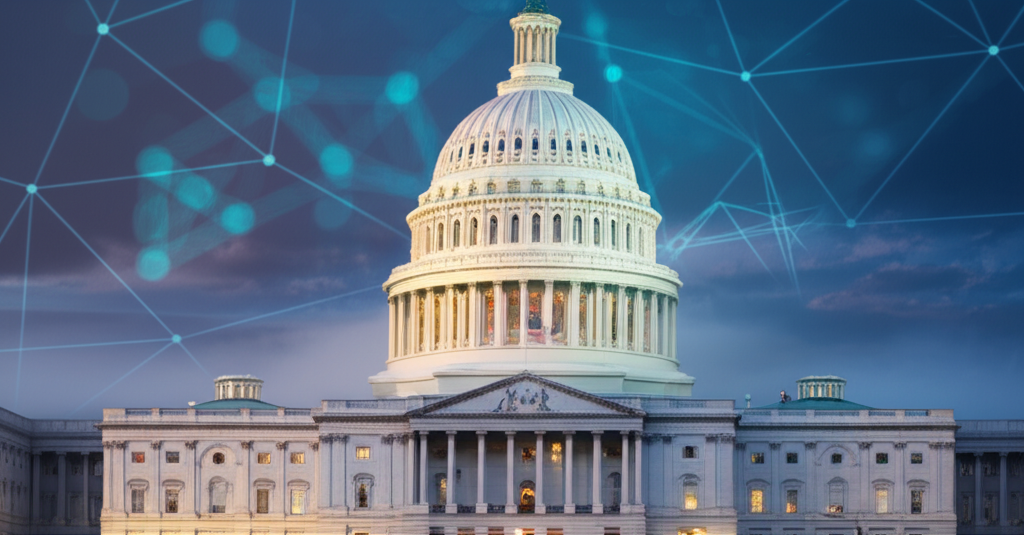
The federal government just declared war on state AI regulation. While Time Magazine crowned tech’s biggest names “Person of the Year,” Washington signed an executive order that could reshape how every AI tool you use gets governed. Meanwhile, Oracle’s stock collapse is the first real crack in the AI infrastructure boom. Three stories, one theme: the AI era is maturing, and the stakes just got a lot higher.
📰 The Rundown
🏛️ Trump Signs Executive Order to Override State AI Laws

➡️ The move: President Trump signed an executive order on December 11 creating a federal framework to preempt state AI regulations. The order establishes an AI Litigation Task Force within the DOJ to sue states with laws deemed “inconsistent with federal policy.” States with “onerous AI laws” could lose federal broadband funding. Laws in Colorado, California, Texas, and Utah are likely targets.
⚡ Why it matters: The patchwork of state AI regulations has created compliance headaches for businesses operating nationally. But critics argue the executive order prioritizes AI company profits over consumer protections. Legal challenges are expected, with experts noting the president cannot simply nullify state laws without Congressional action. This battle will play out in courts for months.
🎯 Your takeaway: Regulatory uncertainty is now a workplace reality. If your organization uses AI tools, watch how this unfolds. The rules governing what AI can and cannot do in your state may change dramatically.
🏆 Time Names “Architects of AI” Person of the Year

➡️ The move: Time Magazine named eight tech leaders its collective 2025 Person of the Year: Jensen Huang (Nvidia), Sam Altman (OpenAI), Elon Musk (xAI), Mark Zuckerberg (Meta), Lisa Su (AMD), Dario Amodei (Anthropic), Demis Hassabis (DeepMind), and Fei-Fei Li (Stanford HAI). Their combined net worth: $870 billion. The magazine called 2025 the year AI’s “full potential roared into view.”
⚡ Why it matters: This isn’t just a magazine cover. It marks the moment AI builders became household names like Jobs and Gates before them. A recent poll shows 82% of Gen Z adults have used AI chatbots, versus just 33% of boomers. The gap between AI natives and AI skeptics is now a generational divide with real career implications.
🎯 Your takeaway: The architects got the cover, but you’re building with their tools every day. The question isn’t whether AI matters to your career. It’s whether you’re building skills that make you more valuable in an AI-powered workplace.
📉 Oracle’s 45% Stock Collapse Signals AI Infrastructure Reality Check

➡️ The move: Oracle shares have plunged 45% from their September highs after reporting $12 billion in quarterly capital expenditures, far exceeding analyst expectations. The company raised its 2026 capex forecast by another $15 billion. Cloud and AI infrastructure revenue also missed Wall Street targets. The stock dropped 14% in a single day last week.
⚡ Why it matters: Oracle’s stumble reveals AI’s first hard limit: physics and debt. Building the data centers that power ChatGPT and enterprise AI costs tens of billions, and someone has to pay for it. This doesn’t mean AI is slowing down. It means the easy money phase is over and sustainable business models matter now.
🎯 Your takeaway: AI hype is cooling. Practical value is becoming the standard. The tools and skills that deliver measurable results will separate winners from the noise.
🔧 Tool Spotlight: ClickUp Brain
ClickUp Brain turns your project management into an AI command center. Instead of juggling separate apps for tasks, meetings, and documents, Brain connects everything in one place with AI that actually understands your work context.
What makes it different: Most AI assistants answer generic questions. Brain pulls from your specific projects, tasks, and team communications. Ask “What’s blocking the product launch?” and it searches your actual workspace, not the internet.
Best for: Project managers, team leads, and operations professionals who spend too much time switching between apps and chasing updates.
Key features:
- AI agents that assign tasks, track progress, and send updates automatically
- Meeting summaries that turn calls into action items without manual work
- Context-aware answers from your workspace data
Pricing: Brain features require a paid ClickUp plan starting at $7/user/month. The full AI suite is part of the Business plan at $12/user/month.
👉 Try it: Sign up at clickup.com/brain
✨ Try This Today: The Policy Impact Check
The Trump executive order shows how quickly regulations can shift. Here’s how to use AI to stay ahead of policy changes that affect your work.
The technique: When news breaks about regulatory or policy changes, use AI to quickly assess impact on your role, team, or industry.
How to use it:
1. Find a recent policy change relevant to your work (the AI executive order, new data privacy rules, industry regulations)
2. Open ChatGPT, Claude, or your preferred assistant
3. Prompt: “I work in [your role] at [type of company]. Summarize how [policy change] might affect my day-to-day work and what I should prepare for.”
4. Follow up: “What are three questions I should ask my manager or legal team about this change?”
Why it works: Policy documents are dense and time-consuming. AI can extract the relevant implications for your specific situation in minutes. You’ll walk into meetings informed instead of scrambling to catch up.
Time required: 5 minutes. Far less than reading a 10-page legal analysis.
🔗 The Wire
📌 Microsoft 365 pricing update: Enterprise subscriptions will increase in July 2026 as Microsoft adds Security Copilot agents and enhanced endpoint management to E3 and E5 plans.
📌 Yahoo/YouGov poll: 53% of Americans believe AI is likely to “destroy humanity” someday, while 63% think AI will become too advanced for humans to control.
📌 State attorneys general pushback: 36 state AGs urged Congress in late November to oppose federal preemption of state AI laws, setting up a legal battle ahead.
Neural Notes — AI that amplifies your value, not replaces it.